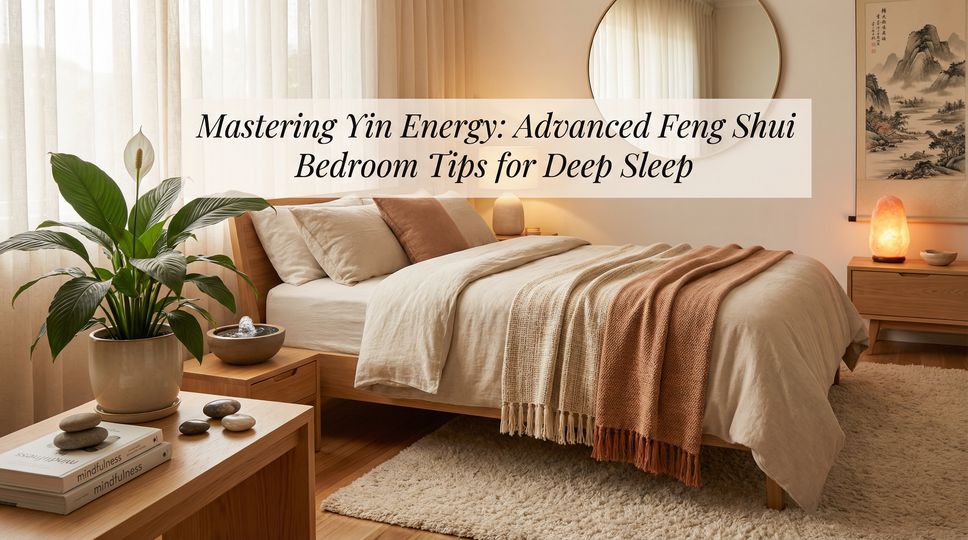
In our previous post, we covered the foundational aspects of a feng shui bedroom, such as the essential Command Position and basic bed placement. However, placing your furniture correctly is only half the battle. To create a space that truly rejuvenates your spirit and heals your body, we must dive deeper into the quality of energy—specifically, the cultivation of Yin.
In the philosophy of Feng Shui, the universe is composed of two opposing but complementary forces: Yin (passive, dark, quiet, cool) and Yang (active, bright, loud, warm). While your living room and home office thrive on active Yang energy, your bedroom has a singular primary purpose: to be the ultimate Yin sanctuary.
In this guide, we will move beyond basic layout tips and explore how to curate the sensory experience of your bedroom to cure insomnia, reduce anxiety, and foster deep, restorative connection.
The Philosophy of the Yin Bedroom
Modern life is overwhelmingly Yang. We are constantly stimulated by screens, traffic, artificial lights, and high-stress jobs. If your bedroom also carries high Yang energy, your body never receives the signal to fully shut down.
A Feng Shui bedroom focused on Yin energy isn’t just about aesthetics; it is about signaling safety and stillness to your subconscious mind. When the environment is quieted, the internal chatter settles, allowing for deep REM sleep.
1. Color Psychology: Moving Beyond Beige
While neutral skin tones are the standard advice for bedrooms, cultivating Yin energy allows for a slightly broader, yet specific palette. The goal is to avoid high-energy colors (Reds, bright Oranges, Neon) which activate the "Fire" element and stimulate passion but kill sleep.
Ideally, choose:
- Soothing Earth Tones: Terracotta, sand, and warm taupe provide grounding energy (Earth element), making you feel supported and stable.
- Soft Blues and Greens: These represent the Wood and Water elements. In muted, pastel tones, they promote healing and growth. However, avoid cold, icy blues which can make a room feel stark.
- The "Cocoon" Effect: Don't be afraid of darker walls. A deep charcoal or navy wall can create a cave-like, womb-like atmosphere that feels incredibly protective and conducive to sleep, provided the lighting is managed well.
2. The Headboard: Your Mountain of Support
In Feng Shui, the headboard is more than a design choice; it represents the "Black Turtle"—the mountain at your back that protects you.
For the best energy flow:
- Solid is Best: Avoid metal bars or open-slatted headboards. These represent holes in your support system and allow energy to rush through, rather than pool around you.
- Soft edges: Choose upholstered headboards with rounded corners. Sharp corners (poison arrows) pointing at your head while you sleep can induce subconscious anxiety.
- Secure Attachment: Ensure the headboard is firmly attached to the bed or wall. A wobbly headboard creates a subtle feeling of instability in your life and relationships.
3. Managing Mirrors: The "Active" Reflections
A common point of confusion in bedroom Feng Shui is the placement of mirrors. Mirrors are the "aspirin" of Feng Shui—they cure many structural issues—but in the bedroom, they are often problematic.
Mirrors reflect light and movement, creating active Yang energy. If you struggle with insomnia, a large mirror facing the bed acts like a caffeine shot for the room. It doubles the movement of your tossing and turning.
The Solution:
- If you have mirrored closet doors, try covering them with opaque curtains or removable wallpaper.
- Position dressing mirrors on the inside of closet doors.
- If you must have a mirror in the room, ensure it does not directly reflect your body while you are lying in bed. This is believed to deplete your personal energy (Qi) while you sleep.
4. The Digital Detox: EMFs and Energy Fields
Ancient Feng Shui masters did not have to contend with smartphones, but the principles of energy interference remain relevant. Electromagnetic Fields (EMFs) are a modern form of invisible clutter.
Your bedroom should be a tech-free zone. The blue light from screens mimics daylight, disrupting your circadian rhythm (a biological form of Feng Shui).
Actionable Steps:
- Ban the TV: If possible, remove the television. It acts as a black mirror when off and a source of chaotic noise when on.
- Analog Alarm Clocks: Swap your phone for a battery-operated alarm clock.
- Distance Your Phone: If you must keep your phone in the room, charge it on the other side of the room, not on the nightstand next to your head.
5. The Subconscious Impact of "Under the Bed"
What lies beneath your bed matters. In Feng Shui, Chi (energy) needs to circulate around your body to heal and regenerate you while you sleep.
If the space under your bed is stuffed with old shoes, luggage, or boxes of tax returns, you are literally sleeping on top of your baggage. This stagnant energy blocks the flow of Chi and can lead to restless sleep or subconscious stress.
The Fix: ideally, leave the space under the bed empty. If you live in a small apartment and storage is non-negotiable, store only "soft" items like spare linens, pillows, or seasonal blankets. Never store sharp objects, memorabilia from past relationships, or emotionally charged documents under where you rest.
6. Lighting: Creating Twilight
Lighting is the quickest way to manipulate the Yin/Yang balance. Overhead lighting is generally too harsh for a bedroom.
- Layered Lighting: Use lamps on nightstands for reading, but ensure the light is directed downward or diffused by a shade.
- Warm Temperatures: Use bulbs with a low Kelvin rating (2700K or lower). This warm, yellow light mimics firelight and sunset, triggering melatonin production.
- Blackout Curtains: Total darkness is essential for Yin energy. Ensure your window treatments block out streetlights, which represent external intrusion into your private sanctuary.
7. Dealing with En-Suite Bathrooms
Many modern master bedrooms feature an en-suite bathroom without a door, or with a door that is frequently left open. Bathrooms are places where water drains away; in Feng Shui, this can symbolize a leaking of wealth or health energy.
Furthermore, the humidity and odors from a bathroom are not conducive to the crisp, clean energy needed for sleep.
The Tip: Keep the bathroom door closed at night. If there is no door, install a curtain or place a folding screen between the bed and the bathroom entrance to visually and energetically separate the cleansing space from the sleeping space.
Conclusion: Trust Your Intuition
Creating a Feng Shui bedroom is not about following a rigid set of superstitious rules; it is about mindfulness. It is about creating an environment that honors your need for rest.
Start small. Clear the clutter from your nightstand today. Close the bathroom door tonight. Notice how the energy shifts. By respecting the Yin nature of your bedroom, you create a foundation for better health, stronger relationships, and a more balanced life.