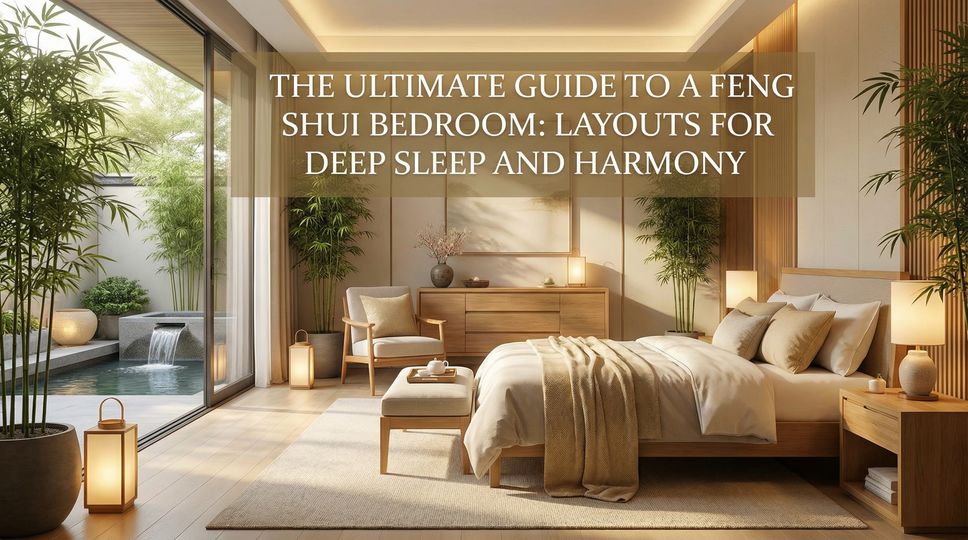
Is Your Bedroom Keeping You Awake?
We spend approximately one-third of our lives in bed. From a Feng Shui perspective, the bedroom is arguably the most critical room in your home. It is the space where you recharge your personal energy (Qi) and where your most vulnerable self resides during sleep. If the energy in this room is chaotic, stagnant, or aggressive, it directly impacts your health, your relationships, and your ability to focus during the day.
In this comprehensive guide, we will explore the foundational principles of creating a Feng Shui bedroom designed for restoration, intimacy, and peace.
1. The Commanding Position: Mastering Bed Placement
The most important rule in bedroom Feng Shui is the Commanding Position. This principle relates to how you position yourself in life—are you in control, or are you constantly surprised by what comes your way?
To achieve the commanding position, your bed should be placed so that:
- You can see the door: You should have a clear view of the entrance from your pillow.
- You are not directly in line with the door: Avoid placing the bed so your feet point directly out the door (often called the "coffin position" in traditional Feng Shui). This channel of energy is too rushing and aggressive for sleep.
- You have a solid wall behind you: Your headboard should rest against a solid wall, not a window or the middle of the room. This provides psychological and energetic support.
Tip: If your room layout forces you to be in line with the door, place a bench, a rug, or a piece of furniture at the foot of the bed to act as an energetic buffer.
2. The Headboard: Stability and Support
In Feng Shui, your headboard represents stability and support in your life, particularly in your romantic relationships and career.
Best Headboards:
- Solid Wood or Upholstered: These provide a feeling of security. Upholstered headboards are excellent for inviting a softer, more nurturing energy.
- Attached to the Bed: Ensure the headboard is firmly attached. A wobbly headboard correlates to a lack of grounding.
What to Avoid:
- Metal Bars: These resemble a prison or cage and can create cutting Chi (energy).
- Storage Headboards: While practical, sleeping with heavy books or objects directly above your head can cause subconscious anxiety and headaches.
- No Headboard: Sleeping without a headboard is akin to having no mountain behind you for protection.
3. Decluttering: Clearing the Path for Rest
Clutter is the enemy of good Feng Shui, but it is especially detrimental in the bedroom. Clutter represents unfinished business and stagnant energy.
The Hidden Clutter Zone: Under the Bed
The space under your bed should ideally be completely empty. This allows Qi to circulate freely around you while you sleep, healing and rejuvenating your body.
If you live in a small apartment and must use under-bed storage, follow these rules:
- Store only soft items: Linens, pillows, or out-of-season blankets.
- Avoid energetic anchors: Do not store shoes (walking away energy), old letters from ex-partners (emotional baggage), or sharp objects/gym equipment (active/aggressive energy) under your bed.
4. Choosing the Right Palette: Skin Tones and Earth Elements
The bedroom is a Yin space—quiet, dark, and cool. Therefore, you want to avoid overly Yang colors (like bright neon reds or oranges) which stimulate the brain.
Ideal Feng Shui Bedroom Colors:
- Skin Tones: From pale porcelain to rich chocolate browns, skin tones are naturally sensual and soothing.
- Earth Tones: Terracotta, sand, cream, and soft cocoa ground the energy.
- Soft Blues and Greens: These represent healing and growth, but keep them muted. Pastels or dusty shades are better than electric variants.
A Note on Red: While red is the color of passion, use it sparingly in the bedroom. Overuse can lead to restlessness and arguments. Use it as an accent (a pillow or a candle) rather than painting all four walls crimson.
5. Mirrors and Electronics: The Energy Disruptors
Two of the most common modern Feng Shui mistakes involve mirrors and technology.
The Mirror Debate
Traditional Feng Shui suggests that mirrors in the bedroom can invite third parties into a marriage or bounce energy around the room, making it difficult to sleep.
- The Fix: If you have a mirror, ensure it does not face the bed directly. If you can see your reflection while lying in bed, cover the mirror with a fabric drape at night or angle it away.
Electronic Smog
Televisions, computers, and exercise equipment represent active energy, work, and stress. They emit electromagnetic fields (EMFs) that can disrupt the immune system and sleep cycles.
- The Fix: Ideally, keep the TV out of the bedroom. If that isn't possible, place it in an armoire that can be closed, or cover it with a beautiful scarf when not in use. Keep your phone charging in another room or at least 6 feet away from your head.
6. Symmetry: Balancing the Relationship Sector
Whether you are single and looking for love, or currently in a partnership, your bedroom should be designed for two people. This creates a balance of power and invites equality.
- Nightstands: You need a nightstand on both sides of the bed. They don't have to match perfectly (unless you prefer that aesthetic), but they should be of similar size and visual weight.
- Lighting: Place a lamp on each nightstand. This symbolizes clarity and equal energy for both partners.
- Space: Ensure there is walking space on both sides of the bed. Pushing one side of the bed against a wall literally "corners" one partner and restricts the flow of energy for the other.
Conclusion: Start Small
Transforming your bedroom into a Feng Shui sanctuary doesn't have to happen overnight. Start with the basics: clear the clutter from under your bed and ensure your sleeping position puts you in command of the room. By making these intentional shifts, you open the door to deeper sleep and a more harmonious life.
Stay tuned for the next post in our series, where we will dive deeper into activating the "Love Corner" of your home!