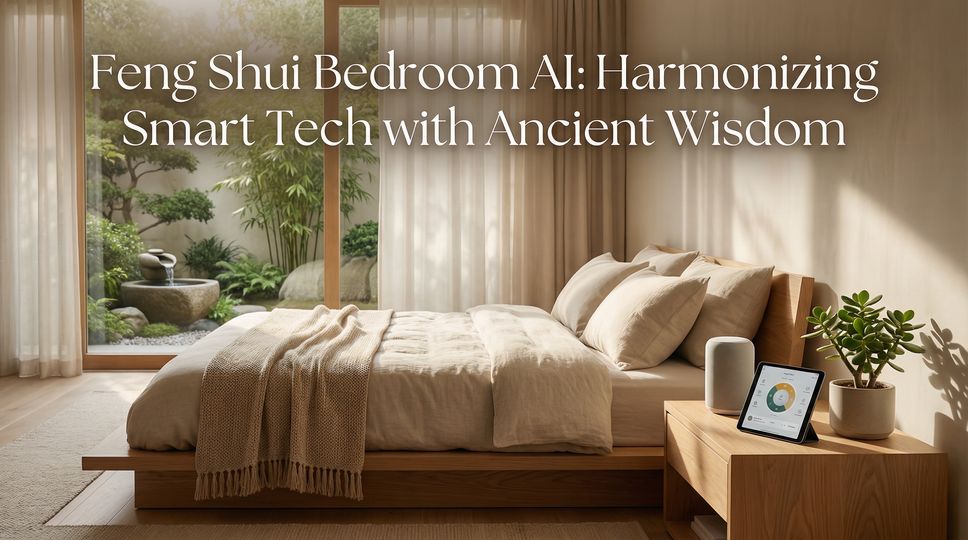
The Intersection of Algorithms and Energy
In our previous exploration of Feng Shui in the modern age, we touched upon the basics of digital clutter. But as we move deeper into the 21st century, a new question arises: Can Artificial Intelligence (AI) and Smart Technology actually enhance good Feng Shui, particularly in the bedroom?
At first glance, the two concepts seem diametrically opposed. Feng Shui (Wind and Water) connects us to the natural world, emphasizing organic flow, grounding elements, and serenity. AI and smart home technology, on the other hand, represent the peak of artificiality, often associated with electromagnetic fields (EMFs), distraction, and active "Yang" energy.
However, as a Feng Shui practitioner, I believe in adaptation. If Chi is the energy of life, it flows through everything—even our circuits. In this post, we will explore how to utilize AI-driven design tools and smart home automation to create a bedroom that is not only high-tech but deeply restorative and aligned with ancient principles.
Using AI Design Tools to Optimize Layout (Form School)
Before we talk about gadgets in the room, let's talk about how AI can help you create the room. The Form School of Feng Shui relies heavily on the placement of furniture, specifically the "Command Position" of the bed.
Moving heavy furniture to test different layouts disrupts the peace of a home and is physically exhausting. Enter AI interior design apps.
Virtual Staging for Chi Flow
Tools like Interior AI, Midjourney, or specialized room planners allow you to upload a photo of your bedroom and digitally rearrange furniture. Here is how to use them for Feng Shui:
- Test the Command Position: Use AI visualization to see how your bed looks on the wall opposite the door, without being in direct line with it (the "Coffin Position").
- Visualize Balance: Feng Shui demands symmetry in the bedroom to promote relationship harmony. Use AI tools to visualize matching nightstands and lamps to ensure the visual weight is balanced before you buy.
- Color Analysis: Ask an AI tool to generate color palettes based on the Bagua map area your bedroom occupies. For example, if your room is in the Love/Relationship corner, ask the AI to "generate a bedroom interior design featuring soft earth tones, pinks, and skin tones for a soothing atmosphere."
Expert Tip: When prompting an AI for design ideas, explicitly use terms like "minimalist," "decluttered," and "soft lighting" to ensure the generated images respect the Yin energy required for sleep.
Smart Lighting: Mimicking the Rhythms of Nature
One of the most powerful ways to align with the Tao (the Way of Nature) is to live in accordance with the sun. However, modern life keeps us indoors. This is where AI-driven smart lighting becomes a potent Feng Shui cure.
Circadian Rhythm Alignment
Harsh, bright white light is "Sha Chi" (cutting energy) in a bedroom after sundown. It stimulates the brain and suppresses melatonin.
- The Setup: Install smart bulbs (like Philips Hue or LIFX) that sync with local sunset times.
- The AI Integration: Program the AI assistant to gradually shift the color temperature from cool blue/white (Yang) during the day to warm amber/red (Yin) in the evening.
- The Benefit: This mimics the natural transition of the sun, signaling to your body's internal clock that it is time to rest, thereby harmonizing your internal Chi with the external environment.
The Sound of Silence (and Nature)
Stagnant energy can accumulate in a silent, heavy room. Conversely, noise pollution is a major disruptor of peace. AI-powered soundscapes can act as a "Sound Cure."
Using a smart speaker (with the microphone muted—more on that later), you can utilize generative soundscapes that adapt to your sleep phases.
- Pink Noise & Nature Sounds: Water sounds are excellent for wealth and flow, but be careful with water elements in the bedroom. In Feng Shui, too much water energy in the bedroom can cause emotional drowning. Stick to soft wind through trees or light rain sounds generated by AI apps like Endel or Calm, which adjust frequencies to induce deep Yin states.
The Elephant in the Room: EMFs and Boundaries
While we are embracing tech, we must address the Feng Shui taboo: Electromagnetic Fields (EMFs). Electronic devices emit fields that can disturb the subtle energy field of the human body during sleep.
If you are bringing AI into the bedroom, you must establish strict boundaries to maintain the sanctity of the space.
The "Digital Sunset" Protocol
Use the AI to defeat the AI. Set up an automation routine:
- 9:00 PM: All non-essential devices go into "Sleep Mode." Wi-Fi routers can be scheduled to turn off automatically via their app.
- Distance is Key: Your smart speaker or phone charging station must be at least 6 to 8 feet away from your head. This creates a buffer zone for your aura.
- The Black Screen Rule: Mirrors in the bedroom are often covered or positioned away from the bed in Feng Shui because they reflect energy. A large TV screen or computer monitor acts as a black mirror. If you have these in the bedroom, use AI art modes (like on the Samsung Frame) to display calming, nature-inspired art when not in use, or better yet, conceal them entirely.
Air Quality: The Breath of the Home
"Feng" literally means Wind. The quality of the air you breathe dictates the quality of your Chi. Smart air purifiers are an excellent modern application of this principle.
- Sensors as Guardians: AI-enabled air purifiers monitor particulate matter and VOCs in real-time. When air quality drops (stagnant Chi), they automatically ramp up circulation.
- Placement: Place the purifier in the "Health" area of the room (usually the center, or East sector) to keep the energy fresh and circulating without creating a draft directly over the bed.
Conclusion: Intentionality is Everything
The danger of AI in the bedroom is passivity—letting algorithms dictate your environment without your input. The Feng Shui approach requires intentionality.
Don't fill your bedroom with gadgets for the sake of novelty. Instead, ask yourself: Does this device support Yin energy? Does it help me connect with natural rhythms, or does it distract me from them?
By using AI to visualize calming layouts, automate natural lighting cycles, and monitor air quality, you are not rejecting tradition; you are evolving it. You are creating a "Smart Sanctuary" where technology serves the ancient human need for rest, safety, and harmony.
Stay tuned for Post #3 in our series, where we will discuss "Virtual Feng Shui: Cleaning Up Your Digital Desktop for Career Success."